Core Aeration and Overseeding in Concord NH

Give your lawn room to breathe

Compacted soil is one of the most common problems we see in New Hampshire lawns. Foot traffic, heavy equipment, and clay-heavy soil all pack the ground down over time. When soil is compacted, water and nutrients cannot reach the roots. The grass thins out and weeds move in.

Core aeration pulls small plugs of soil out of the ground, creating channels for air, water, and nutrients to reach the root zone. It is one of the most effective things you can do for a struggling lawn.

When to aerate

In New Hampshire, fall is the best time to aerate. The soil is still warm enough for root growth, temperatures are cooling down, and there is less competition from weeds. We typically aerate in September and October.

Overseeding after aeration

Aeration creates the perfect conditions for new seed. The plugs leave behind small holes that protect the seed from wind and birds while keeping it in contact with the soil. We use high-quality seed blends selected for New Hampshire growing conditions.

  • Core aeration: Pulls 2-3 inch plugs across the entire lawn. Plugs break down naturally within a few weeks.
  • Overseeding: Premium seed blend spread immediately after aeration for maximum seed-to-soil contact.
  • Results: Thicker lawn, fewer weeds, better water absorption. Most customers see noticeable improvement by the following spring.
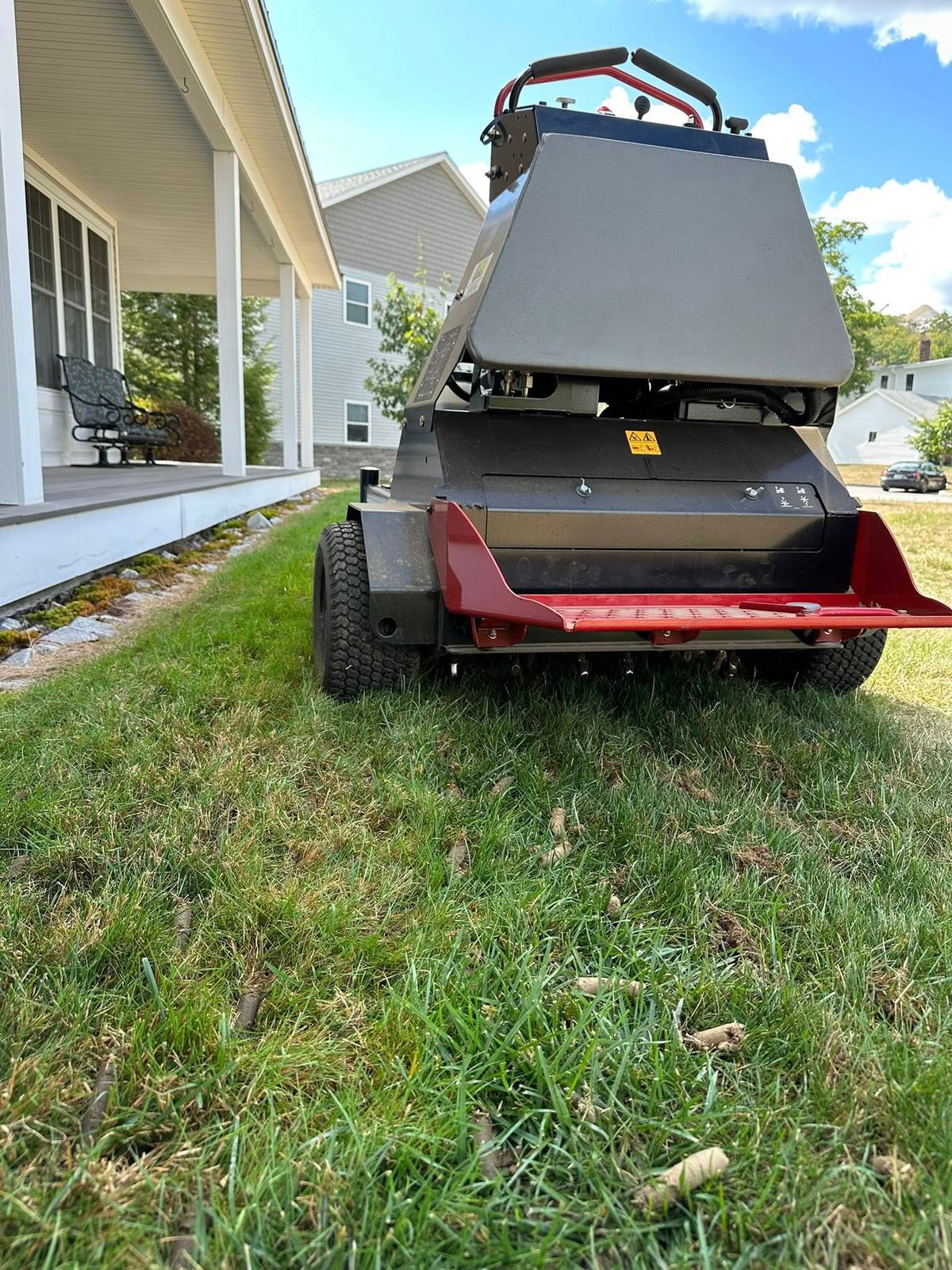
Core aerator machine pulling plugs on residential lawn by Kyle Poirier Landscaping LLC
Common Questions

Frequently Asked Questions

Fall is the best time, specifically September and October. The soil is still warm enough for root development, temps are cooling which reduces stress on the grass, and there is far less competition from weeds. Spring aeration is possible but fall gives you the best results in New Hampshire's climate.

Core aeration uses a machine to pull small plugs of soil, typically 2 to 3 inches deep, out of the ground across your entire lawn. Those plugs break down naturally over a few weeks. The channels they leave behind let air, water, and nutrients reach the root zone in a way that compacted soil prevents. The result is a healthier root system, better water retention, and a thicker lawn over time.

Compacted soil often shows up gradually. The lawn does not look bad until it starts thinning. New Hampshire lawns with clay-heavy soil, heavy foot traffic, or lots of equipment use benefit from aeration every 1 to 2 years even when things look fine. It is easier to prevent decline than fix it.

The holes left by aeration create ideal seed-to-soil contact. Seed that falls into those channels is protected from wind and birds, stays moist, and germinates faster. Aerating and overseeding together in one pass is significantly more effective than either service on its own.

We use premium seed blends selected for New Hampshire growing conditions: the right mix of shade tolerance, drought resistance, and cold hardiness for this climate. The quality of the seed matters as much as the timing.

New seed typically germinates within 2 to 3 weeks. Most customers notice a noticeably thicker, healthier lawn by the following spring, especially in thin or bare spots that were seeded.

Ready to get started?

Call us today for a free estimate or fill out our contact form.